

Engagement
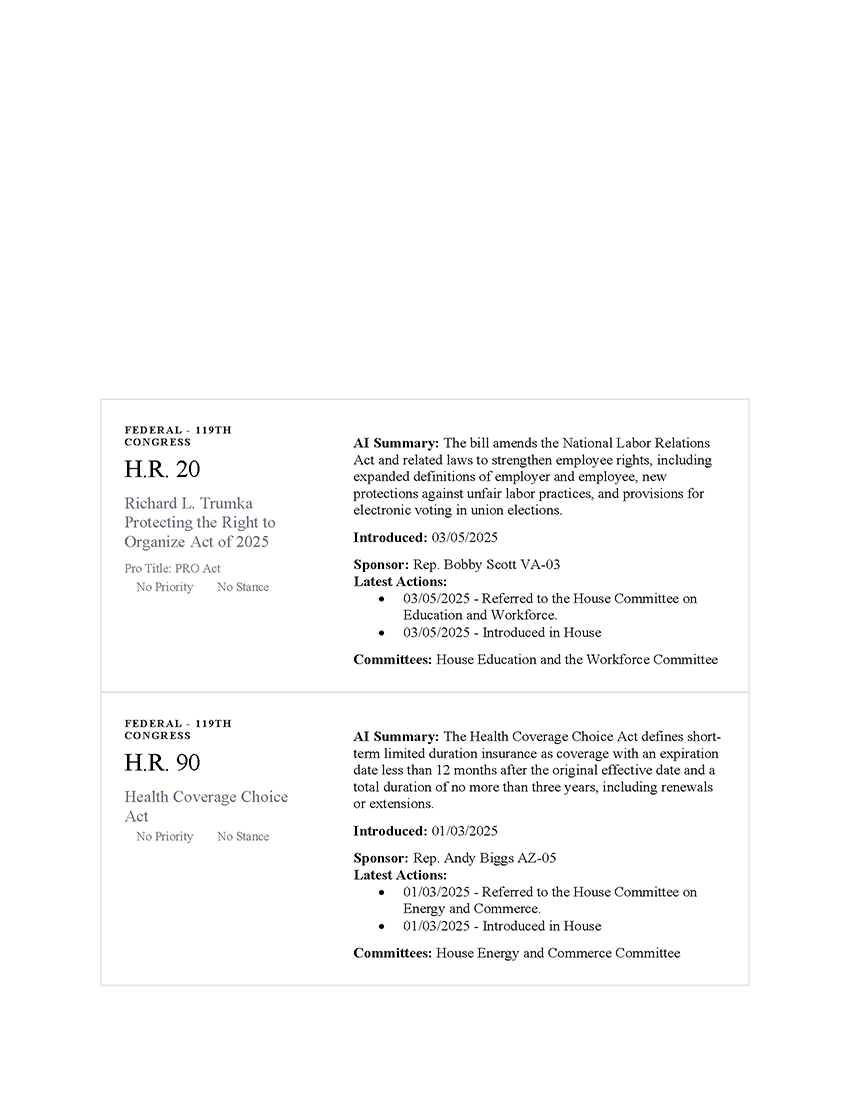
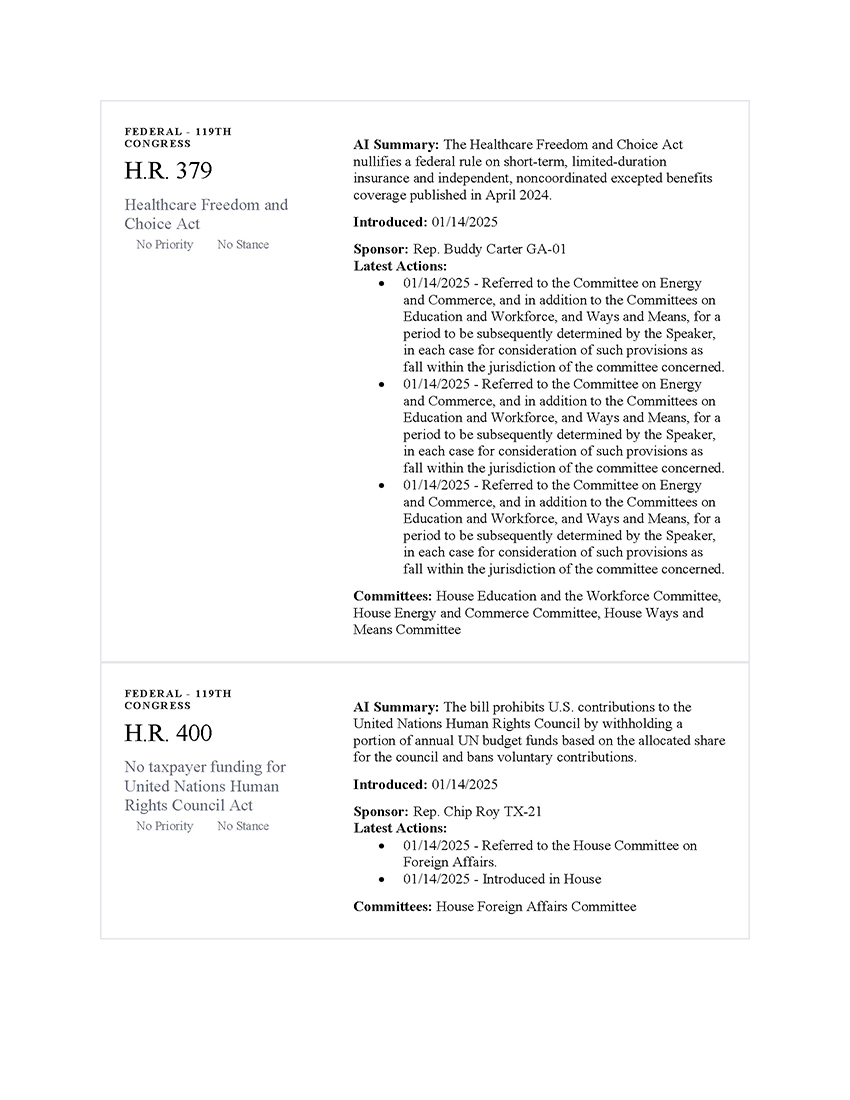
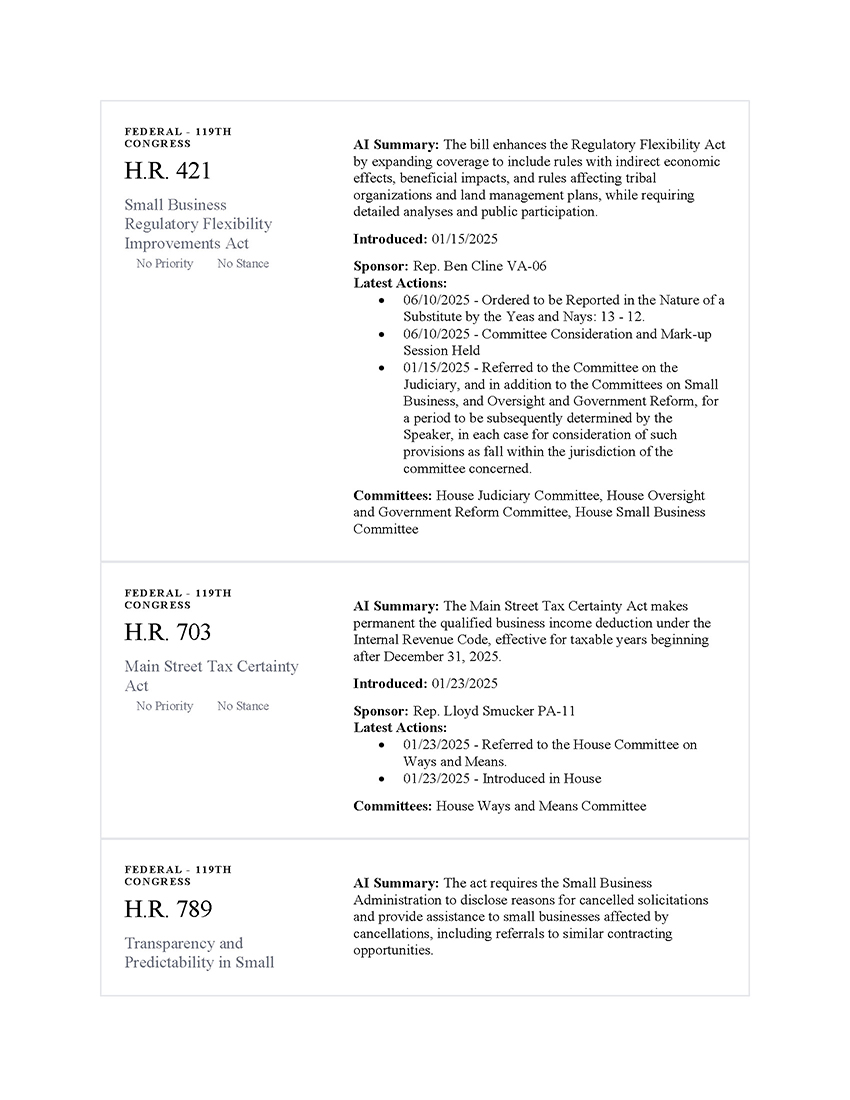
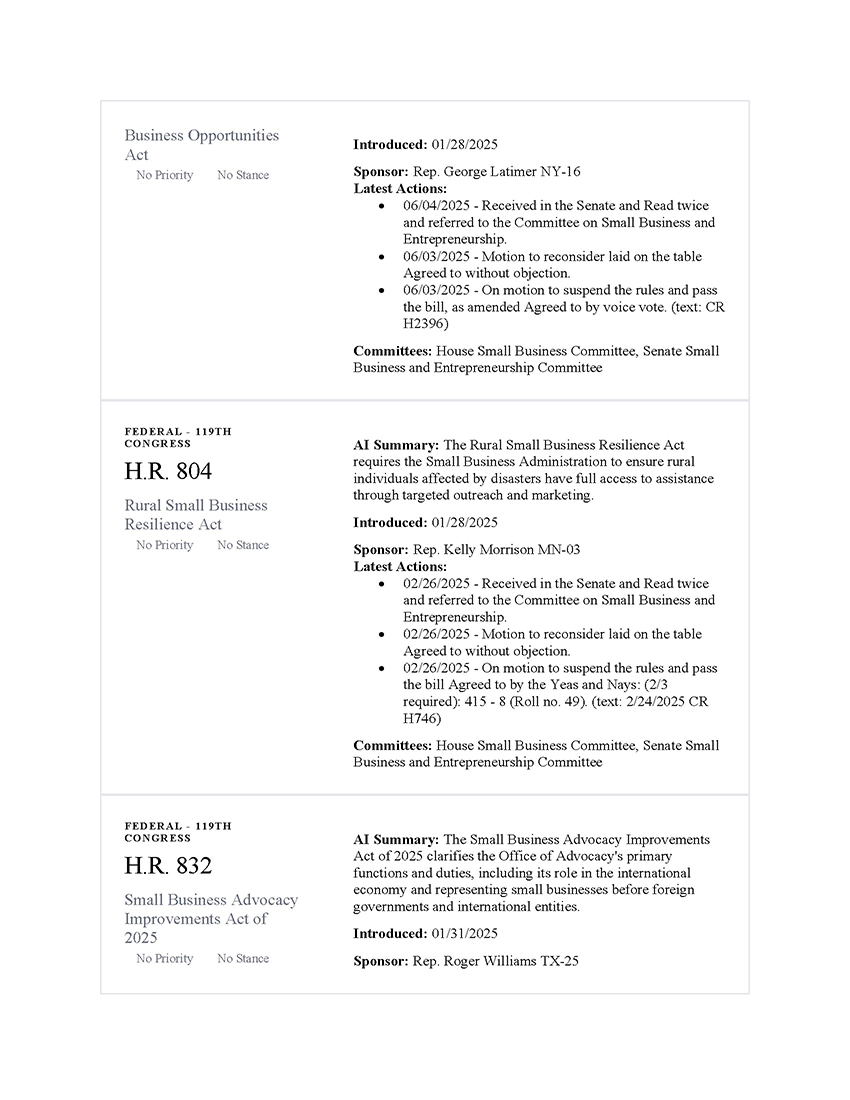
This month, Lobbyit compiled a roundup of STLDI-related legislation in the 119th Congress and began reaching out to sponsors and cosponsors in preparation for the 120th. Given that the legislative agenda upon Congress’ return in November will likely be dominated by appropriations and pressing reauthorizations, and as we wait for the rulemaking on STLDI to be published, we wanted to ensure that we are well positioned for re-engaging on the legislative side in 2027. We reached out to Rep. Andy Biggs’ team, and spoke with Lauren Cook, a Senior Legislative Assistant, about finding a successor to introduce his bill next Congress as the Congressman is running for Arizona governor. In addition, we set up a meeting with Sen. Ron Johnson’s to maintain continuity next Congress and ensure it is on the top of their legislative agenda — the latter is planning for October 13th.
Work on the Hill
President Trump signed the House and Senate reconciled Continuing Resolution on September 2nd, keeping the government funded through December 11th and pushing the final FY27 decisions into the post-election lame duck. The stopgap tracks the framework Congress agreed to back in August, so nothing about the underlying fight has really changed, but it averted a government shutdown at the end of the month.
Appropriators are already uneasy about how the administration is handling the foreign assistance money Congress directed in prior spending. On September 22nd, Senators Patty Murray and Brian Schatz, the top Democrats on Appropriations, warned that the administration plans to redirect $2.5 billion in global health and development funds to cover the costs of shutting down USAID, the agency it has worked to dismantle throughout the President’s second term, while impounding another $725 million set aside for counternarcotics, countering Russia, and economic competitiveness programs. Murray and Schatz argued that Congress appropriated that money for specific purposes and that the administration has no authority to spend it on something else.
The House, for its part, is already gone. Members left town for a seven-week pre-midterm stretch after a short September work period dominated by affordability debates. AI data centers driving up utility bills, higher gas and grocery prices, and a fresh Federal Reserve rate hike all weighed on consumers and drove a flurry of late moves before the chamber adjourned for its fall recess. There was an unsuccessful push to temporarily suspend the federal gas tax, a war powers resolution on the Iran conflict that passed the House 214-208 with four Republicans crossing over, and passage of the Ratepayer Protection Act, a bipartisan bill meant to keep data-center growth from pushing up household utility bills. The Senate rejected its own version of the war powers measure days later, and a companion data-center bill stalled in the upper chamber as well.
The Iran conflict remains unresolved. In late September, Iran floated a seven-day ceasefire that would have reopened the Strait of Hormuz and restarted talks over its nuclear program. Under the proposal, the U.S. would have lifted its naval blockade, unfrozen some Iranian assets, and eased sanctions on Iranian oil, with Iran reopening the Strait and returning to the table. Trump rejected it, and has said publicly that he expects the war to wind down shortly after the November midterms and that Iran could come to a deal once the election is behind us. U.S. officials have also kept renewed strikes on the table. Talks continue through regional mediators, Qatar and Pakistan among them, and U.S.-led efforts to keep tankers moving through the Strait have eased some of the immediate pressure to settle. Given how much oil runs through that waterway, the standoff keeps global energy and shipping markets on edge.
Sanctions and trade measures remain central to the response on both Iran and Russia. On September 18, the President signed the Lindsey O. Graham Sanctioning Russia and Iran Act of 2026 (H.R. 5334), which authorizes mandatory sanctions on Russian government-affiliated entities and oligarchs, lets the President impose tariffs of up to 500% on Russian imports, and allows tariffs of up to 100% on goods from countries that remain among the largest buyers of Russian oil and gas. It also extends the Iran Sanctions Act of 1996 for another five years. By linking the Russia sanctions to tariffs on third countries, the law could push the economic effects well beyond Russia and tie sanctions policy more tightly to trade policy. The President retains broad waiver authority throughout.
On the agriculture side, the 2026 Farm Bill is moving, but slowly. The House passed its version, the Farm, Food, and National Security Act of 2026 (H.R. 7567), earlier this year, and after an August markup that failed to advance the Senate’s companion, the Senate Agriculture Committee finally cleared its bill on a party-line vote on September 16th. The bill updates the core agriculture, nutrition, conservation, forestry, and rural development programs and folds in year-round E15 sales, fertilizer-price transparency, and expanded agricultural research. Democrats are largely united against it over the new SNAP cost-sharing it locks in. Under last summer’s Big Beautiful Bill (H.R. 1), the federal share of SNAP administrative costs drops from roughly 50% to 25% starting in FY27, and beginning in 2028 states with high payment-error rates will owe a portion of benefit costs for the first time. Democrats call the shift unfair to states and are pushing to delay the benefit cost-sharing piece. With 60 votes generally needed on the floor, and a Senate vote not expected until after the midterms, the bill will need real bipartisan buy-in to get anywhere.
Looking ahead, with the House out until after the elections and the Senate heading into its own recess soon, the lame duck is shaping up to be an incredibly busy sprint. FY2027 appropriations top the list, with current funding set to run out December 11th and the Senate poised to introduce their versions of the bills after the midterms. The post-election sessions could also bring new priorities to the front, and how members vote may depend a good deal on how the elections shake out. As it stands, Congress has left a significant amount of work waiting for them after the recess, and all eyes now turn towards the midterms on November 3rd.
Ways and Means Weighs No Surprises Act Overhaul
Members of the House Ways and Means Committee are drafting legislation to revise the 2020 No Surprises Act, the law that shields patients from surprise out-of-network bills in emergencies but has generated far more payment disputes than Congress anticipated. Its independent dispute resolution (IDR) arbitration process has in some cases awarded physicians outsized payments, while insurers have at times refused to pay when they lose — leaving both doctors and insurers pressing Congress for fixes, which Chairman Jason Smith (R-MO) is trying to satisfy on both sides. The effort spans multiple committees: House Energy and Commerce ranking member Frank Pallone (D-NJ) has sent letters to the IDR arbitration firms seeking details on how they resolve disputes and comply with the law, and the Senate HELP Committee is holding a member roundtable this month. Our conversations with the staff of outgoing HELP Chair Bill Cassidy (R-LA), an original NSA cosponsor, have indicated that the NSA is a major component of his legacy-building agenda for the remainder of the term. With limited floor time before the midterms and a lame-duck session dominated by appropriations, lawmakers have a narrow window to act before the new Congress convenes in January.
The No Surprises Act applies to employer-sponsored (ERISA) group health plans, so how the IDR system is reformed directly affects NEA members’ work. Arbitration outcomes that favor providers flow through to plan costs and premiums, and a reform package could reset the qualifying-payment-amount methodology, the arbitration rules, and enforcement against insurers that refuse to pay — all central to employer plan cost and design. We will ensure the flexible plan perspective remains represented as the committees move, and to watch whether a change to the bill rides a year-end vehicle when Congress returns.
Medicare Lifts DME Supplier Moratorium, Adds Prior-Authorization Rules
CMS has lifted the six-month nationwide moratorium, imposed in February, that barred new durable medical equipment (DME) suppliers from enrolling in Medicare, replacing it with a more targeted vetting regime after industry pushback that the freeze stalled expansions, acquisitions, and ownership changes. Starting in October, new suppliers and those with recent ownership changes face a “Probationary Prior Authorization” process in which CMS reviews their bills before paying, and the agency expanded the list of products subject to prior authorization (adding braces, splints, and bone-growth stimulators). The move fits the administration’s broader anti-fraud campaign, which also includes the WISeR prior-authorization payment model launched in six states in January. WISeR has drawn protests from physician groups and congressional Democrats alleging AI-driven claim denials; the Senate rejected a party-line resolution to rescind it in July, while the House FY2027 CMS funding bill (H.R. 9260) would block WISeR after a bipartisan Appropriations amendment — Senate text has yet to be released.
This is primarily a Medicare-supplier and anti-fraud matter, so while not a direct hit to the STLDI debate it does serve as a bellwether. But the expansion of prior authorization and pre-payment review — and the fight over AI-assisted denials under WISeR — reflects utilization-management trends that tend to migrate from Medicare into other forms of commercial coverage and may become cornerstones of the debate around flexible coverage plans. The congressional pushback (the WISeR funding rider, the Wyden resolution) signals how contested these tools are becoming. NEA may want to monitor the prior-authorization debate as a preview of pressures and practices that could reach member employers’ plans.
CMS Purges 760,000 ACA Enrollments Over Suspected Fraud
On September 22nd, CMS announced it had canceled 315,000 unauthorized enrollments on the Affordable Care Act exchanges, causing more than 760,000 people to lose coverage, following an August investigation into enrollments the agency believed were fraudulent. Administrator Oz said CMS expects to recoup $2.2 billion in advance premium-tax-credit payments. The crackdown targets “phantom enrollees” — individuals signed up without their knowledge by unscrupulous brokers collecting commissions on zero-dollar-premium plans. CMS also said it has terminated more than 200 brokers since January and imposed a moratorium on new ACA agents and brokers for the 2027 plan year. Republicans last year cited phantom enrollments as a reason they declined to extend the expiring enhanced premium tax credits, arguing the subsidies expanded zero-premium plans and the associated fraud exposure.
Although this centers on the individual exchanges rather than employer plans, it matters to NEA members in two ways. First, the integrity and cost of the individual market shape the viability of strategies that route workers to exchange coverage where broker conduct and marketplace stability directly affect how well those arrangements work. Second, the fight over the expired enhanced tax credits is a central health-cost issue in the December and post-election agenda, with real implications for the coverage landscape if Democrats retake the House and/or Senate in January. We will continue to track both the credits debate and any marketplace-integrity rules that reach broker and HRA arrangements.
National Employers Association