

Engagement
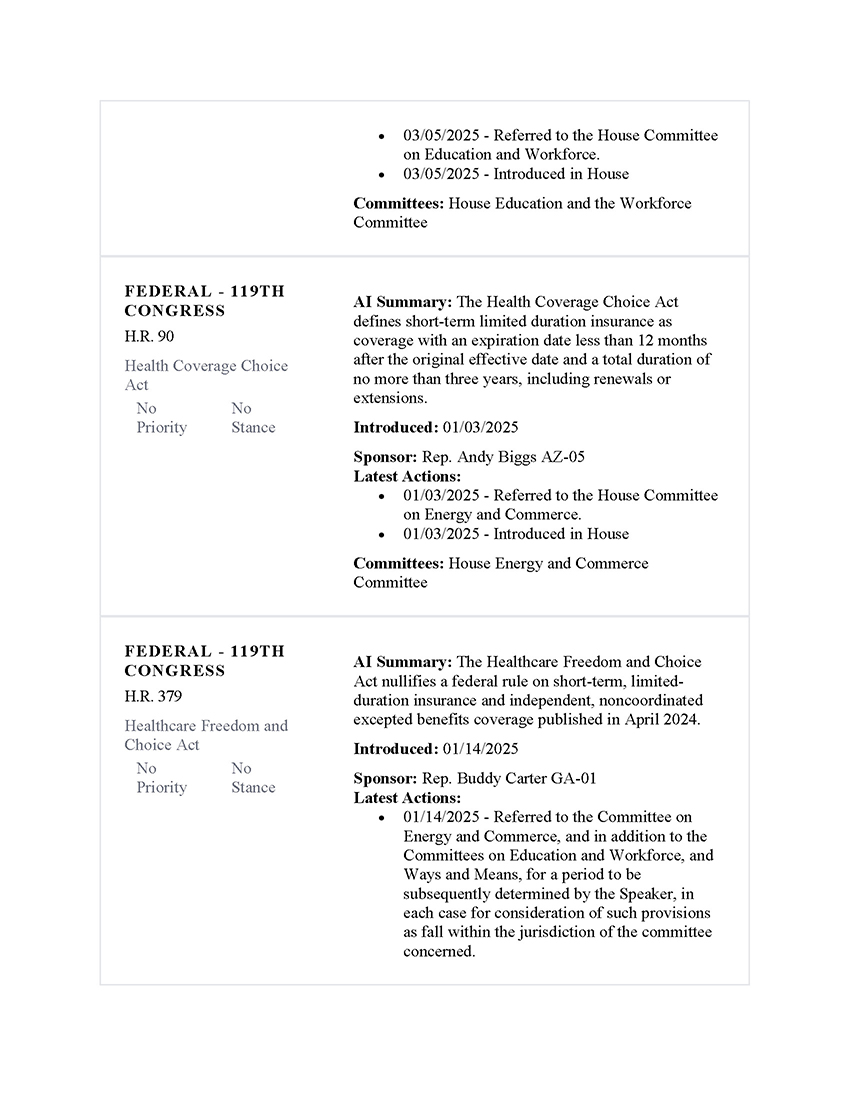
This month, Lobbyit participated in an EO 12566 meeting with the Office of Information and Regulatory Affairs, along with representatives from CMS, regarding a proposed rule on short-term limited-duration insurance. OIRA is the agency that reviews government regulations, information collections, and privacy policies so engaging with them early in the process allowed us to provide our perspective as the rule is being shaped. It was mainly a listening session, giving Lobbyit a chance to present NEA’s case for STLDI access and discuss the past engagement we’ve had on both the legislative and rulemaking fronts. The attendees included Dan Klein (OMB and OIRA), Nora Garrery (HHS Office of the Secretary), Ethel Vargo (CMS), and Adam Huillo (CMS). They seemed encouraged to learn that they wouldn’t be stepping on anyone’s toes on the legislative side, given the lack of momentum despite the introduction of a couple STLDI bills over the past year. While they were unable to provide specific details, we are keeping an eye out for the introduction of the rule over the coming months.
Work on the Hill
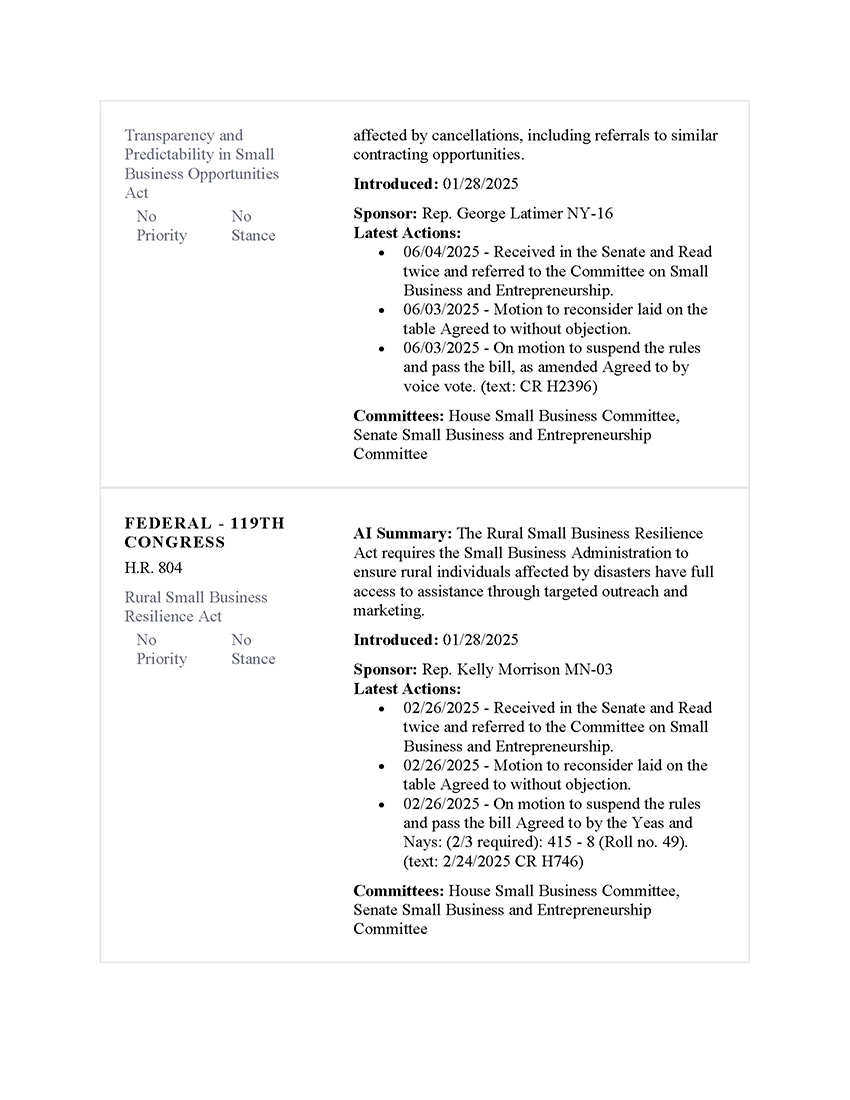
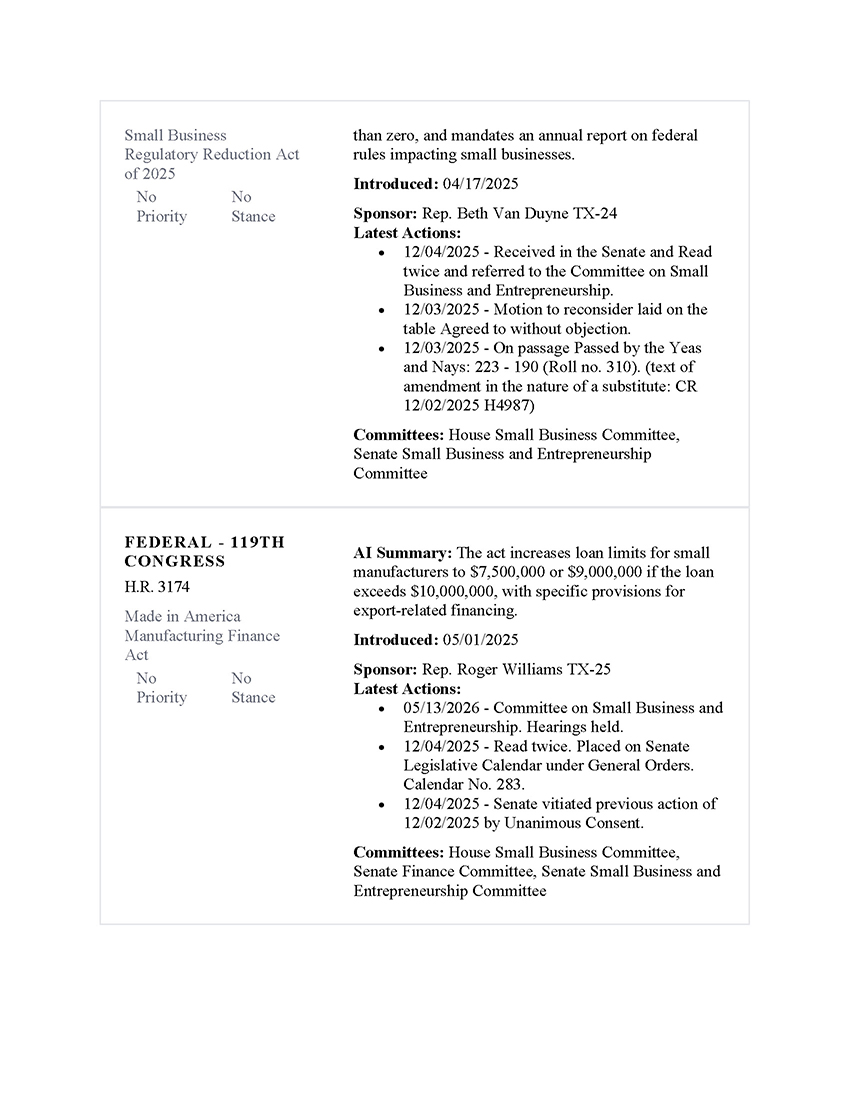
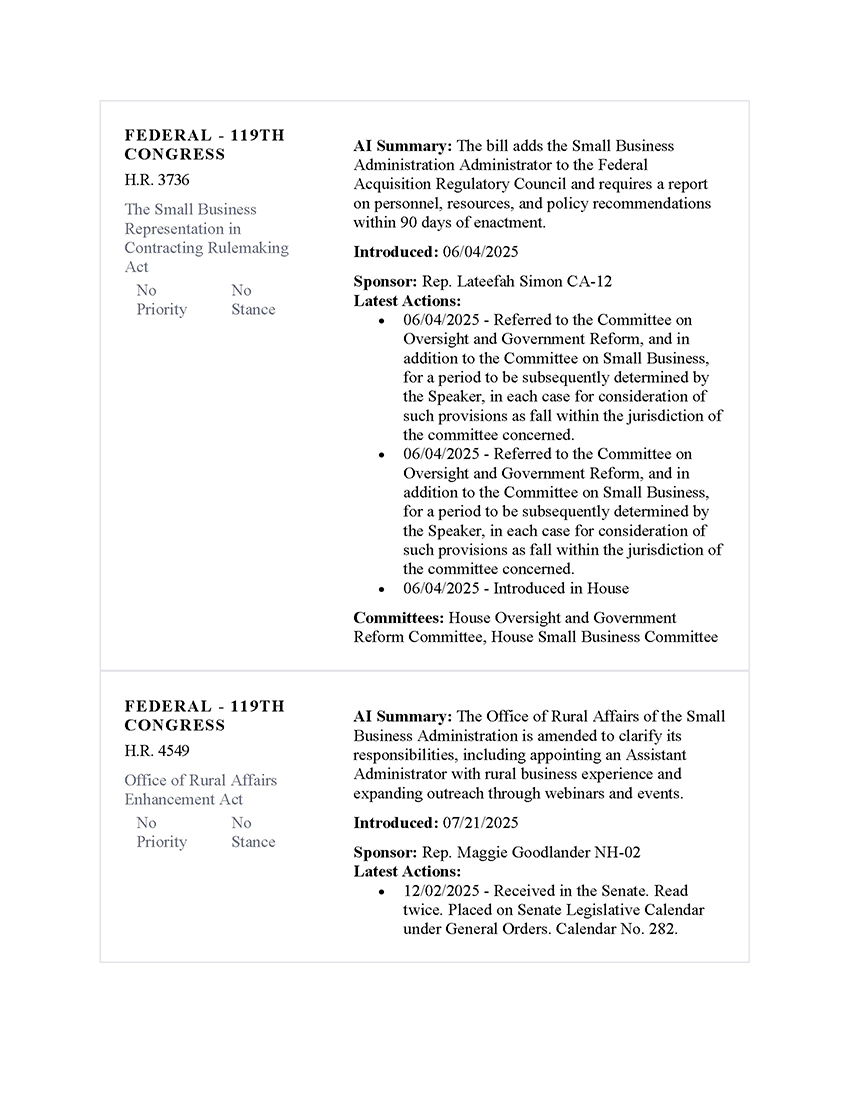
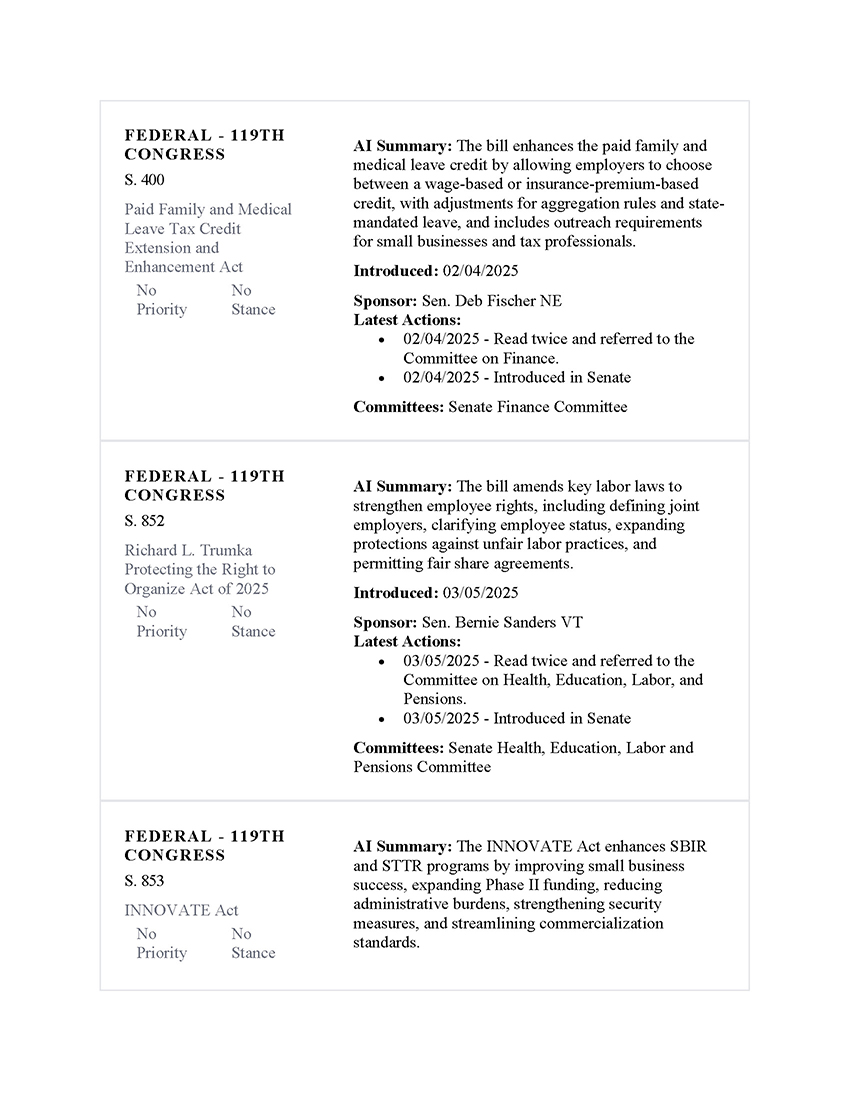
Congress spent the bulk of August back home for its annual recess, but the first week of the month produced the most consequential funding development of the year so far, and the executive branch stayed busy on the trade front throughout. The headline item of the otherwise relatively quiet month was government funding. On August 8th, the Senate voted 90-6 to pass a continuing resolution (CR) that would fund the government at current levels through December 11th, removing the threat of a shutdown on October 1st and pushing final FY2027 spending decisions past the midterm elections. The agreement was particularly bipartisan, with the lopsided vote reflecting how little appetite exists in either party for a shutdown fight this close to the elections. The Senate bill initially differed from the version the House passed in July, most notably by including language that delays a proposed OMB rule that would give federal agencies broader authority to cancel existing grants and reject new ones, as well as an extension of funding for the nation’s surface transportation programs. Because the two chambers passed different bills, the House must either accept the Senate’s version or the two sides will need to negotiate a compromise. The House returned on August 31st and passed the Senate’s CR into law on September 1st. Meanwhile, the underlying appropriations process remains stalled. The House has moved all 12 of its FY27 bills through committee, but the Senate has yet to mark up any of its bills as the two parties continue to negotiate topline spending numbers. As a practical matter, full-year FY27 funding will now be decided in the post-election lame duck session, giving Congress a full slate of work even after the November midterms.
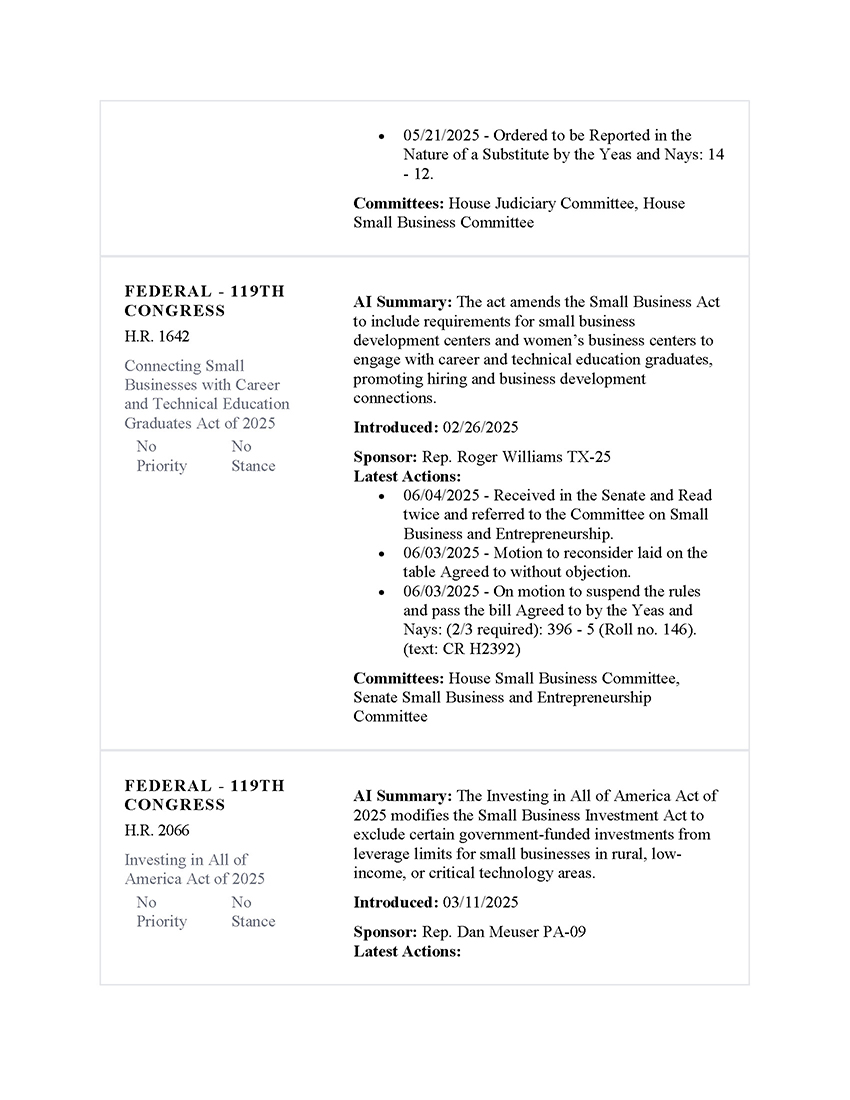
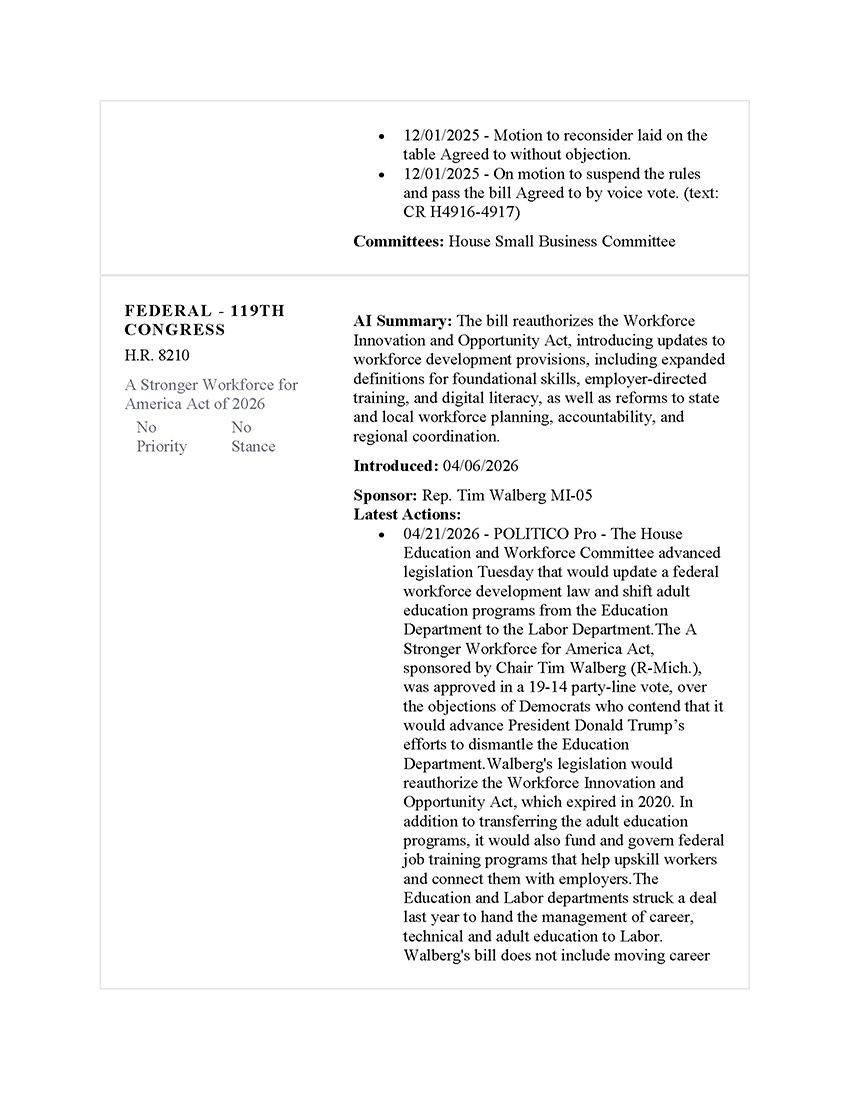
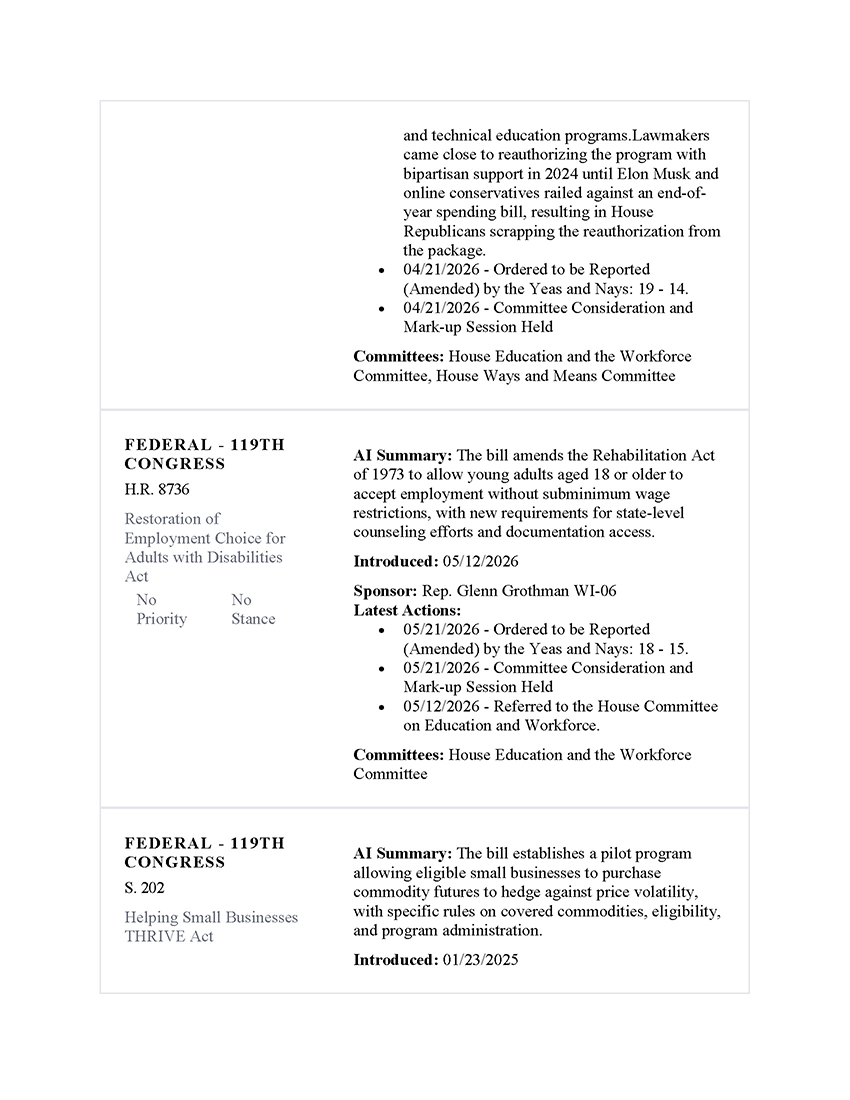
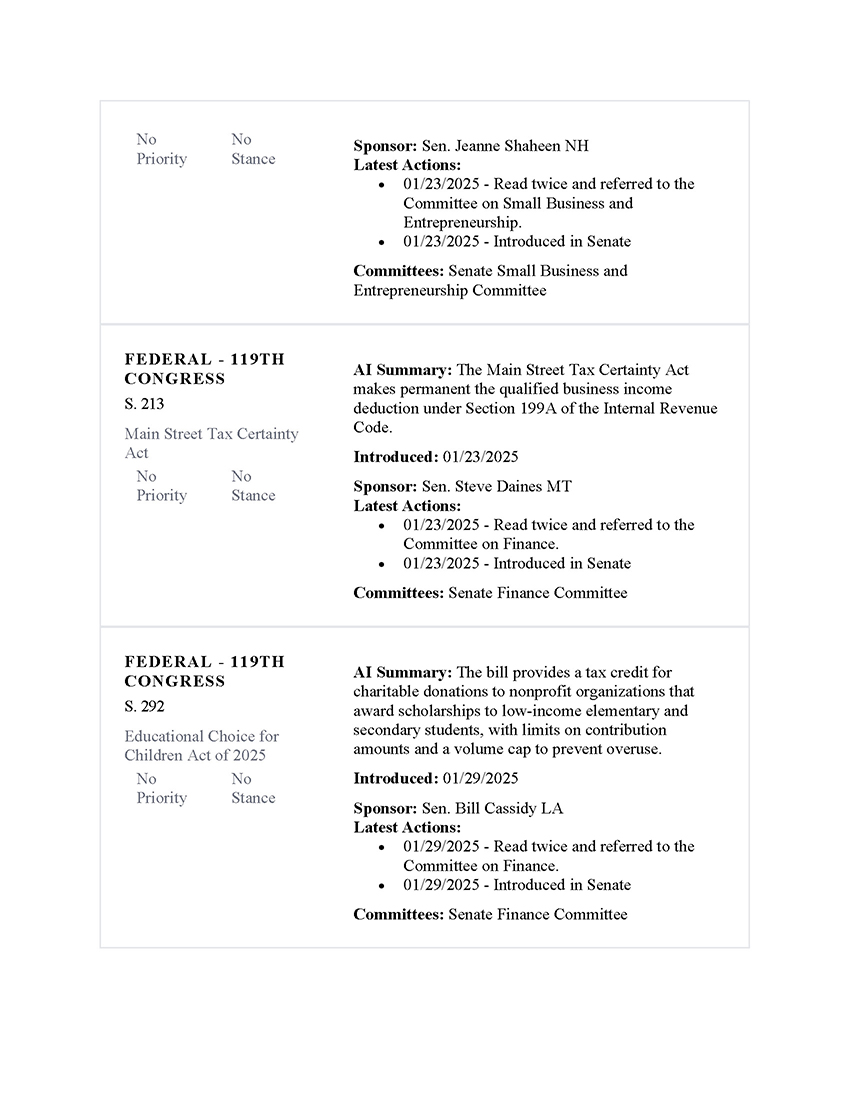
On the legislative front, Senate Republican leadership, the White House, and Senate conservatives agreed just before the recess to postpone action on a third budget reconciliation package until after the break, and the Senate left town without voting on the SAVE America Act, a cryptocurrency market structure bill, or the reconciliation blueprint. With only about three weeks of Senate floor time in September before members leave again for the October campaign stretch, leadership has signaled that a reconciliation vote may well slip until after the November elections. The House also passed its version of the FY27 National Defense Authorization Act before the recess, authorizing $1.15 trillion for defense programs, but the Senate’s companion bill remains blocked from floor consideration. Resolving the NDAA will be a top priority for the Senate when they return later this month.
Trade was the among the most active policy areas of the month. After the Supreme Court struck down the administration’s emergency-powers tariffs earlier this year, the administration replaced its expiring 10% across-the-board levy with roughly equivalent duties imposed under Section 301 of the Trade Act, a more durable legal footing. Tariffs on roughly $20 billion in Canadian goods took effect on August 22nd after negotiations failed to produce a deal before the deadline, and Canada responded by announcing retaliatory tariffs on U.S. products effective September 8th. The administration also announced new Section 232 tariffs on drones and drone components, proposed expanding the list of products covered by the steel and aluminum tariffs, and won a Court of International Trade ruling upholding its suspension of the de minimis exemption for imports valued under $800.
Looking ahead, the fall calendar is tight and the September work period will be consequential. The House opened the month with an abbreviated one-week session, the Senate returns September 14th, and both chambers depart again in early October so members can campaign ahead of the November 3rd midterms. Beyond the CR, several other deadlines and priorities are stacked into the same window. The current extension of the 2018 farm bill expires September 30th, and with the House-passed bill stalled and the Senate Agriculture Committee unable to advance its own version in early August, Congress will likely need another short-term extension before the October recess. The Senate must also resolve the FY27 NDAA, which remains blocked on the floor, and House committees are working against a September 11th deadline to finalize their portions of the third reconciliation package, though leadership has signaled that a floor vote on reconciliation may not come until after the elections. The House may also take up Russia sanctions legislation during the September session. Once the elections pass, attention turns to what is shaping up to be a busy lame duck session, where full-year FY27 appropriations, the December 11th funding deadline, and potentially reconciliation will all be in play.
EEOC Moves to Eliminate the EEO-1 Report
One of the most significant August developments was the Equal Employment Opportunity Commission’s proposed rule to rescind the mandatory EEO-1 report, the annual workforce-demographic survey that private employers with 100 or more employees have long been required to file, along with the related EEO-2 through EEO-6 collections and the associated recordkeeping of employees’ race, ethnicity, and sex. The rule’s key procedural milestones fell squarely within the month: the Commission held a public hearing on August 11th, and the public comment period closed on August 24th. The scope here is broader than the pay-data debate that dominated earlier EEO-1 controversies: the proposal targets the Component-1 demographic filing itself, the core annual submission every large employer makes, not merely the Component-2 pay-data collection that was discontinued in a prior administration. The rulemaking is part of the deregulatory agenda of the Commission’s current Republican majority under Chair Andrea Lucas, which has moved on several fronts to withdraw or narrow prior-administration workplace-data and guidance requirements.
For NEA members, the potential elimination of the EEO-1 would remove one of the most familiar and longstanding annual compliance obligations in all of employment regulation — an undertaking that, for a large employer, involves compiling and categorizing workforce demographic data across establishments and submitting it on a fixed schedule each year. The administrative and cost relief from ending that requirement would be significant, and it aligns with the broader regulatory-burden-reduction goals that many in the administration support. The rule is proposed, not final, and its ultimate fate and timing remain uncertain; employers that prematurely dismantle the systems that collect and organize demographic data could find themselves scrambling if the rule is delayed, modified, or challenged, or if they still need that data for other purposes such as affirmative-action obligations, diversity analytics, or state-law reporting that continues regardless of the federal EEO-1’s fate. We will continue to track the rule to finalization, understand what recordkeeping obligations survive, and prepare to adjust once the outcome is clear.
IRS Sets 2027 ACA Affordability Threshold
Through Revenue Procedure 2026-26, the Internal Revenue Service set the Affordable Care Act’s employer-mandate affordability percentage for plan years beginning in 2027 at 10.22% of household income, an increase from the 9.96% figure that applied for 2026 and the first time the threshold has risen above 10% since the metric was established. The affordability percentage is the benchmark used to determine whether the coverage an applicable large employer offers is considered “affordable” under the employer shared-responsibility rules: coverage is affordable, and the employer is insulated from the associated penalty, if an employee’s required contribution for the lowest-cost self-only option does not exceed the specified percentage of income, as applied through the available safe harbors. The Revenue Procedure setting the 2027 figure was released in late July, which places it at the very start of the August compliance-planning cycle; it drove a wave of employer-benefits guidance circulating in early August as advisers translated the new number into practical planning implications for the coming plan year.
The practical importance of the higher threshold for NEA members is that it gives applicable large employers modestly more room to shift premium cost to employees for the 2027 plan year without losing the protection of the affordability safe harbors. Because the affordable contribution is calculated as a percentage of income, a rise from 9.96 to 10.22% means an employer can require a somewhat larger employee contribution toward self-only coverage while still meeting the standard, which reduces the employer’s exposure to shared-responsibility penalties and provides a small measure of relief against the persistent upward pressure of health-plan costs. For benefits and finance teams setting 2027 contribution strategies, the updated figure directly informs how contribution tiers can be structured, what the maximum “affordable” employee share is under each safe harbor, and how much flexibility exists to manage plan costs without tripping the mandate. It is a technical but consequential piece of the annual compliance calendar, and the direction of the change in expanding flexibility is favorable to employers across the country.
DOL Proposes Electronic-Disclosure Safe Harbor for Group Health Plans — Comment Window Open Through the Fall
A Department of Labor proposed rule, developed through the Employee Benefits Security Administration, would establish an optional “notice-and-access” safe harbor permitting group health plans to satisfy many of their ERISA disclosure obligations electronically. Under the proposed framework, a covered plan could post required documents online and furnish participants with a Notice of Internet Availability, rather than defaulting to paper delivery by mail, while preserving participants’ right to request paper copies or to opt out of electronic delivery entirely. The proposal extends to group health plans a model broadly similar to the electronic-disclosure safe harbor the Department previously finalized for retirement plans. It was published in late July, and its public comment period runs through September 21st, making it an active, open matter on which employers, plan sponsors, and their advisers could submit comments and begin assessing the operational implications for their own disclosure practices.
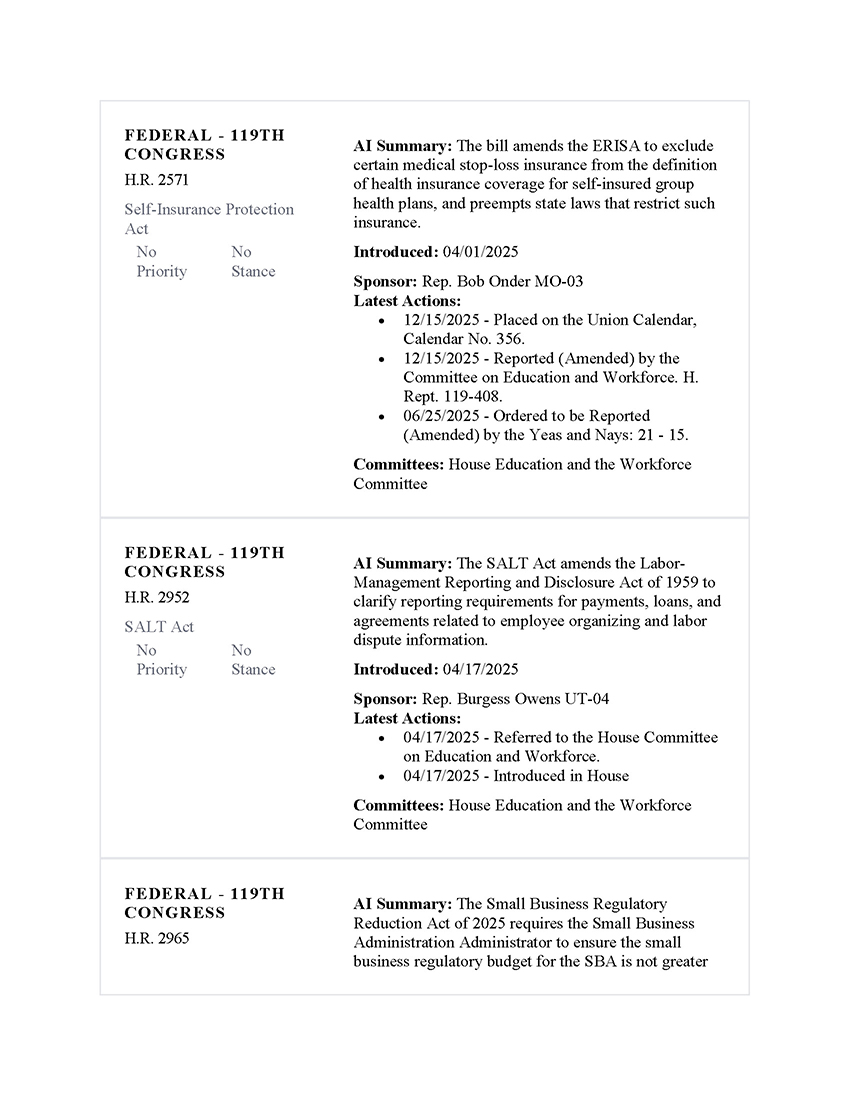
For NEA members, the appeal of the proposed safe harbor is straightforward: it would allow employers that sponsor group health plans to make electronic delivery the default for a range of ERISA-required notices and documents, cutting the printing, postage, and administrative costs associated with mailing paper to every participant and beneficiary. For large employers in particular, those mailing costs are non-trivial, and the ability to rely on a well-defined regulatory safe harbor rather than navigating the uncertainty of whether a given electronic-delivery approach satisfies the rules provides both savings and legal certainty. The preservation of a participant’s right to request paper or opt out means the change is structured as a modernization of default delivery rather than an elimination of access, which should limit objections. The main tasks for employers are to understand the specific conditions the safe harbor would impose — the content and timing of the Notice of Internet Availability, the standards for the website where documents are posted, and the mechanics of the opt-out — and to weigh in during the comment period if aspects of those conditions would be burdensome in practice. We are monitoring the development of the rule and available to draft a public comment on behalf of NEA should it be desired.
National Employers Association